Apple Cobbler Font: A Craft Fair Designer’s Honest Review
First Impression: Warm, Approachable, and Unmistakably Handmade
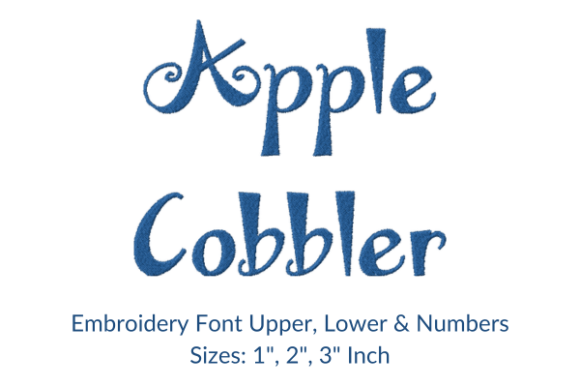
As an embroidery designer who’s prepped over 80 craft fair booths—and shipped thousands of handmade products—I opened Apple Cobbler Font expecting something cozy, nostalgic, and just a little sweet. The name alone conjures cinnamon, parchment, and handwritten recipe cards—so yes, it lands exactly where it should: warm, farmhouse-friendly, and gently decorative. It’s not minimalist. It’s not ultra-modern or techy. It’s the kind of machine embroidery design that makes customers pause at your booth, tilt their head, and say, “Oh—I *know* that feeling.” That emotional resonance? That’s your first sale.
Where Apple Cobbler Font Shines on Craft Fair Products
This font isn’t just legible—it’s *inviting*. On a natural linen tote bag, it reads like a vintage bakery sign. On a cotton apron, it adds charm without competing with pockets or piping. And on a tea towel? Pure magic—especially when stitched in cream thread on oatmeal fabric. Customers love it for personalized gifts: baby names on burp cloths, wedding dates on kitchen linens, or “Est. 2024” on boutique pouches. As an Embroidery file in the School category, it also works beautifully for teacher appreciation items—think embroidered patches for classroom supply bags or “Mrs. Johnson’s Room” pillow covers.
It holds up exceptionally well on curved surfaces too—like baseball caps—when sized appropriately (more on sizing below). And unlike overly delicate scripts, Apple Cobbler Font has generous spacing and open letterforms, so it doesn’t blur into a muddy blob on textured towels or terry cloth. That’s critical when you’re stitching 30+ tea towel embroidery pieces before Saturday morning.
Real-World Selling Strengths
- Booth magnetism: In a sea of geometric fonts and monograms, Apple Cobbler Font stands out because it feels human—not algorithmic. It draws eyes at 6 feet, especially when paired with rustic packaging or dried apple slices tucked beside samples.
- Etsy listing power: This font photographs cleanly—even on phone cameras. Its soft curves and balanced weight translate well in printable mockups, helping Etsy sellers build cohesive design assets without hiring a graphic designer.
- Batch production friendliness: As a digital embroidery file, it’s highly repeatable. Once you dial in tension and stabilizer, you can run 20+ embroidered patches or market bags in under two hours. No re-hooping gymnastics. No tiny corrections mid-stitch.
- Value perception boost: Hand-stitched lettering feels premium—but Apple Cobbler Font delivers that same handmade quality *machine*-stitched. Buyers consistently pay 15–25% more for items using fonts that read as intentional, not generic.
Careful-Use Notes Every Embroiderer Should Know
Don’t skip this step—Apple Cobbler Font is forgiving, but not foolproof. Here’s what I watch for:
- Small lettering: Below 1.25" height, fine interior details (like the curve inside the “e” or the crossbar of the “t”) can fill in or lose definition—especially on dark fabric or thick fleece. Test on scrap first.
- Fabric texture matters: On heavily napped fabrics (terry, sherpa, some canvas), stitch density may need slight reduction to prevent puckering. Always use cutaway or tear-away stabilizer—not just basic iron-on.
- Curved surfaces = strategic sizing: For caps or curved pouches, keep letters above 1.5" tall. Smaller sizes tend to warp visually on rounded planes—even if the machine stitches perfectly.
- Thread contrast is non-negotiable: This font shines brightest with high-contrast thread colors (e.g., navy on ecru, burgundy on oatmeal). Avoid matching thread to fabric—it disappears instantly in person and online.
How It Elevates Your Entire Booth & Brand
Apple Cobbler Font quietly strengthens your brand consistency. Whether you’re selling embroidered patch sets, small shop products, or custom tote bag designs, it creates visual harmony across categories. A customer who buys an apron with “Bake Joyfully” in Apple Cobbler Font will recognize—and trust—the same warmth on your tea towel embroidery or pillow cover. That cohesion builds recognition faster than any logo.
And for buyer engagement? It’s subtle psychology: people don’t just buy text—they buy the *feeling behind it*. “Apple Cobbler” implies tradition, care, and comfort. When stitched onto a handmade product, it tells your customer: *This wasn’t mass-produced. Someone chose this word, this font, this moment.* That story sells itself—at craft fairs, on Etsy, and in local boutiques.
Practical Designer Notes Before You Stitch
- Always test Apple Cobbler Font on scrap fabric *in your actual hoop*, using your usual thread and stabilizer combo.
- Check letter spacing—some versions auto-kern tightly; manually adjust if “ll” or “ff” looks cramped.
- Review stitch density. If the design feels heavy or dense in preview software, reduce density by 5–10% before running on textured fabric.
- Confirm hoop size compatibility. Some Apple Cobbler Font variants include multiple sizes—verify which fits your most-used hoop before batch loading.
- Create *at least one real mockup*—not just a digital render. See how it drapes, how light hits the stitches, how it feels in hand.
- Compare fabric colors side-by-side: a single thread color can look warm on ivory but cool on oatmeal. Keep swatches on hand.
- Double-check commercial licensing. Since you’re producing finished products for sale (not just personal use), confirm the embroidery file permits commercial embroidery use—especially for Etsy seller listings or wholesale orders.
Final Thought: It’s Not Just a Font—It’s a Customer Connection
At the end of a long craft fair day, what sticks with buyers isn’t the most complex machine embroidery design—it’s the one that made them smile, remember a memory, or imagine gifting it to someone they love. Apple Cobbler Font does that effortlessly. It’s versatile enough for school-themed teacher gifts, cozy enough for kitchen collections, and distinctive enough to anchor your entire line of handmade products. Use it thoughtfully, test it thoroughly, and let its warmth do the talking. Your booth—and your bottom line—will thank you.