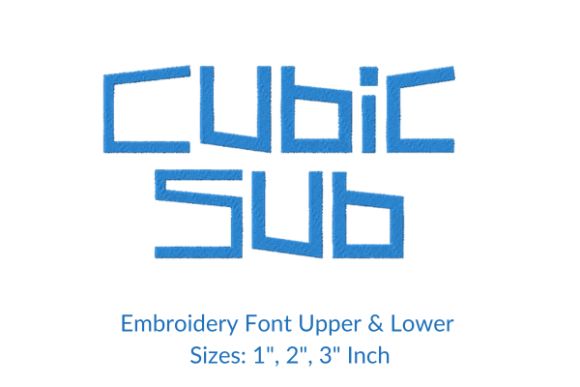
Cubic Sub Font Embroidery Design
A Seasonal Designer’s First Look: Clean, Contemporary, and Quietly Festive
As an embroidery designer who’s built holiday collections for over a decade—think Christmas markets, back-to-school launches, and Easter gift drops—I opened Cubic Sub Font Embroidery Design expecting a crisp, modern font. What I found was something more nuanced: a balanced blend of geometric precision and subtle warmth. It doesn’t shout “holiday!” with bells or snowflakes—but it *invites* celebration through clarity, structure, and quiet confidence. The letterforms feel grounded, slightly rounded at the corners, with consistent stroke weight and generous spacing. That makes it neither stark nor overly playful—it lands firmly in the elegant modern category, with just enough softness to feel cozy on a baby blanket or kitchen towel. For seasonal use, that’s gold: it reads as timeless, not trend-bound. Whether stitched in ivory thread on navy linen or charcoal on oatmeal cotton, Cubic Sub Font Embroidery Design carries emotional weight without leaning into cliché.
Where It Shines in Real Holiday Product Lines
This isn’t just another embroidery file—it’s a versatile anchor for cohesive seasonal storytelling. On sweatshirt embroidery, it handles family matching sets beautifully: “The Andersons • 2024” across three sizes reads unified, not cramped. As tote bag design, it transforms everyday carry into gift-ready elegance—especially when paired with minimalist holiday icons (a single pine sprig, a tiny star). For kitchen towel embroidery, its clean lines resist visual clutter amid flour-dusted countertops and cookie trays. And yes—it works on pillow covers and embroidered patch applications too, holding detail even at 3-inch heights. Etsy sellers will appreciate how easily Cubic Sub Font Embroidery Design integrates into product mockups: it renders cleanly in printable mockups and social media previews, helping customers instantly visualize personalized gifts. In craft fair displays, it elevates handmade items without competing with hand-stitched motifs—it supports, never overshadows. Because it’s designed for names, dates, and short quotes, it fuels high-intent purchases: “Emma • Born Dec 2024”, “Home for the Holidays”, “Our First Christmas Together”. That specificity drives conversion during peak holiday shopping periods.
Strategic Use Cases for School & Seasonal Collections
While Cubic Sub Font Embroidery Design fits broadly, its alignment with the School category is unexpectedly strong—not for textbooks, but for the emotional milestones schools anchor: graduation caps, teacher appreciation gifts, first-day-of-kindergarten totes, and end-of-year memory pillows. Pair it with a subtle monogram or school mascot icon, and you’ve got a premium personalized gift that feels intentional, not generic. For holiday drops, think “Class of 2025 • Winter Graduation” on scarves or “Mrs. Chen • 25 Years” on an apron—elegant, respectful, quietly celebratory. That same tone translates seamlessly into home decor: embroidered table linens for Thanksgiving, monogrammed ornaments for tree-trimming parties, or baby onesies for holiday newborn announcements. Its neutrality means it doesn’t date quickly—making it ideal for small shop product rotations year after year.
Smart Placement & Practical Limits
Like any high-quality embroidery font, Cubic Sub Font Embroidery Design performs best when matched thoughtfully to fabric and function. Avoid using it below 1.5 inches tall on dense fabrics like thick towels or terry cloth—fine details may blur. On stretchy garments (think ribbed knit tees or curved baseball caps), test stitch density first: tight lettering can pucker if stabilizer isn’t optimized. Dark fabric demands careful thread color testing—light grays or heathers often read richer than pure white. Metallic thread? Proceed with caution: the clean geometry benefits from sheen, but test stitch tension to avoid skipped stitches in tight curves. And while it’s highly legible, don’t force it into tiny hoop sizes (e.g., under 3” round) without verifying clarity in your actual machine setup. Always confirm commercial licensing before selling finished seasonal products—this is essential for Etsy sellers and small business owners building scalable holiday inventory.
Why It Builds Trust, Value, and Repeat Holiday Buyers
Holiday shoppers scan fast—and Cubic Sub Font Embroidery Design delivers instant visual recognition. Its consistency across products (tote + pillow + ornament) reinforces brand cohesion, even for shops without a logo. That builds trust: customers know what quality looks like, season after season. It also lifts perceived product value—clean typography signals care, craftsmanship, and intentionality. When a customer receives a sweatshirt with perfectly spaced, evenly stitched Cubic Sub Font Embroidery Design, they don’t just see a name—they feel seen. That emotional resonance increases giftability and social sharing (“Look what I got for Mom!”). For digital embroidery file buyers, it’s a reliable workhorse font—no re-digitizing needed for standard phrases, no guesswork on spacing. And because it avoids cutesy or dated tropes, it retains relevance across multiple holidays and life events—making it a smart long-term investment for any seasonal embroidery collection.
Designer Notes You’ll Want to Keep Handy
- Always test thread colors on both light and dark fabric swatches—what looks neutral on screen may shift dramatically in stitch.
- Check stitch density before bulk production—adjust if needed for fabric texture or thread weight.
- Confirm required hoop size and match stabilizer type to your base fabric (cutaway for knits, tear-away for stable wovens).
- Create realistic mockups—not just flat PNGs, but draped sweatshirt or folded towel views—to preview how Cubic Sub Font Embroidery Design lives in real life.
- Review small details post-stitch: corners, serifs (if present), and inter-letter spacing—especially after washing tests.
- Plan matching color palettes in advance: choose 3–4 thread shades that harmonize across your entire holiday line.
- Verify commercial licensing terms before listing finished products—this protects your small shop and honors the original designer’s work.