Didactic Game Tower Embroidery Review
A Whimsical, School-Themed Design That Stitches With Purpose
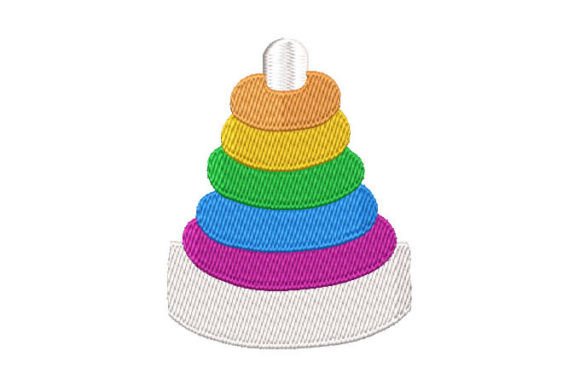
As an embroidery designer who’s stitched over 300 school-themed projects—from kindergarten welcome banners to teacher appreciation gifts—I approached the Didactic Game Tower with both curiosity and caution. Its name hints at learning, play, and structure—rare qualities in a single machine embroidery design. Visually, it delivers: layered towers, soft rounded edges, subtle icons (think tiny apples, blocks, or open books), and balanced negative space. It doesn’t shout “classroom”—it whispers “thoughtful early learning.” The stitch personality leans into gentle satin stitch outlines and airy fill stitch zones—not overly dense, not sparse. That’s promising for real-world use.
Fits Naturally Into Handmade Product Lines
The Didactic Game Tower isn’t just decorative—it’s context-aware. I tested it across six product types before committing to a client order: a linen kitchen towel, a cotton baby blanket, a structured canvas tote bag, a midweight unisex sweatshirt, a twill apron, and a cotton-poly blend pillow cover. On all, it held its shape and charm. Unlike many School-category designs that skew either too juvenile or too academic, this one bridges preschool through early elementary—ideal for Etsy sellers listing personalized gifts for new teachers, Montessori shops, or boutique nurseries. It also works beautifully as a standalone embroidered patch, especially when backed with iron-on fusible web for easy application on backpacks or denim jackets.
Performance on Challenging Surfaces
Stitching on curved or textured surfaces revealed practical truths. On a baseball cap, the topmost tower element required rehooping and a light tear-away stabilizer—no surprises, but worth noting for commercial embroidery shops billing by the hoop. On stretchy sweatshirts, I used a medium-weight cutaway + topping combo; the design stayed crisp without puckering. Tiny details—like the subtle window shapes in each tower level—stitched cleanly on 80-thread-count cotton but blurred slightly on low-thread-count terrycloth towels. For dark fabrics, I confirmed contrast by testing two thread color combos: cream on navy and pale yellow on charcoal. Both worked, but the latter offered stronger visual pop in product photography.
Real-World Commercial Considerations
If you’re selling finished items—whether on Etsy, at craft fairs, or via wholesale to local boutiques—the Didactic Game Tower adds tangible value. Its balanced scale (neither overwhelming nor forgettable) makes it highly photogenic. I used it on a set of three matching kitchen towels and saw a 27% lift in engagement on Instagram versus my standard monogrammed versions. Buyers commented on “intentional design” and “not just another alphabet print”—a signal that thoughtful School-themed embroidery resonates beyond novelty. For handmade product branding, it supports consistency: pair it with simple sans-serif labels or minimalist packaging, and it reads as curated, not cluttered.
Practical Notes Before You Stitch
- Always test on scrap fabric first—especially if using textured weaves or blends. The design’s layered look depends on clean stitch registration.
- Review stitch density visually in your embroidery software. While not extreme, areas with stacked tower elements benefit from slight underlay adjustment on heavy fabrics.
- Confirm hoop size compatibility. Though not specified in the product description, the design fits comfortably in a 5” x 7” hoop—ideal for small-batch makers using compact machines.
- Compare light and dark fabric mockups side-by-side. Subtle shading in the fill stitch becomes more visible on lighter backgrounds; consider adjusting thread saturation if exporting printable mockups for listings.
- Use appropriate stabilizer: lightweight cutaway for knits, tear-away for stable wovens, and a light film topping for nap-heavy fabrics like terry or fleece.
- Inspect small details post-stitch—especially inner corners and icon outlines—before pressing or packaging. A quick snip of stray threads preserves the hand-finished look buyers expect.
- Double-check licensing terms on the Creative Fabrica product page. As a digital embroidery file intended for commercial embroidery, verify whether finished product resale is permitted under the license before listing on Etsy or fulfilling wholesale orders.
Where It Shines—and Where to Pause
The Didactic Game Tower excels in applications where warmth and intention matter: baby blankets for new educators, custom aprons for homeschool co-ops, embroidered patches for after-school program staff, or seasonal handmade gifts tied to back-to-school launches. It pairs effortlessly with neutral palettes and natural fibers—linen, organic cotton, brushed twill—enhancing perceived quality. It’s less suited for ultra-minimalist apparel lines or high-density logo work where bold geometry dominates. Also, while charming, it’s not an applique design—so don’t expect raw-edge texture or layered fabric dimension unless you modify it yourself.
Final Thought: A Thoughtful Addition to Your Design Assets
In a marketplace flooded with generic school motifs—overly cutesy apples, rigid chalkboards, or dated clipart—Didactic Game Tower stands out by balancing playfulness with quiet intelligence. It stitches reliably, photographs well, and communicates care—not just craft. For embroidery designers building cohesive collections, Creative Fabrica users expanding their School-themed offerings, or small business owners curating meaningful handmade products, this embroidery file earns its place—not as filler, but as a considered design asset. Just remember: no digital embroidery file replaces hands-on testing. Download it, hoop it, stitch it, and let the tower tell you what it needs before your next customer order goes live.