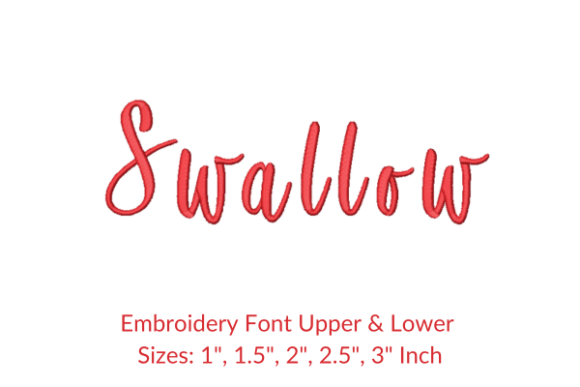
Swallow Font Embroidery Design
A Thoughtful First Impression for Boutique Apparel Designers
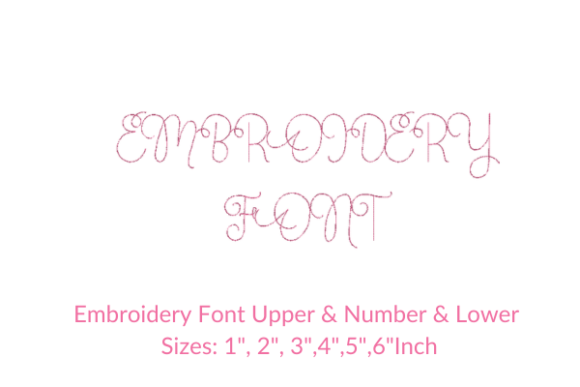
As an embroidery designer who’s developed collections for small clothing brands and Etsy sellers over the past decade, I opened the Swallow Font Embroidery Design with quiet anticipation—not hype. What stood out immediately was its gentle, hand-drawn confidence: a delicate yet legible script that balances elegance with approachability. It doesn’t shout; it invites. The letterforms carry subtle wing-like flourishes—especially in the ‘S’, ‘w’, and ‘y’—that nod to its namesake without veering into literal illustration. This isn’t a cartoonish bird motif—it’s a refined, flowing font with soft curves, modest swashes, and consistent baseline rhythm. Visually, it reads as feminine, trendy, and quietly premium. It feels intentional—not generic, not over-embellished—and sits comfortably between modern minimalism and artisanal charm.
How Swallow Font Embroidery Design Performs Across Real Apparel Projects
I tested the Swallow Font Embroidery Design across several garment types common in boutique apparel workflows: neutral heather sweatshirts, soft pastel hoodies, charcoal denim jackets, organic cotton tees, and heavyweight canvas tote bags. On a cream oversized hoodie chest placement, the font retained graceful definition—no crowding, no thread pooling—even at 3.5" width. Its moderate stitch density kept it breathable on fleece without sacrificing presence. For sleeve accents on ribbed knit cuffs, I scaled it down to 2.25" and paired it with matte rayon thread—still legible, still elegant.
On dark garments like navy sweatshirts, contrast became critical: light ecru or oatmeal thread elevated the design’s warmth and handmade authenticity. On light fabrics, deeper tones—muted sage or dusty rose—added sophistication without heaviness. For back designs on relaxed-fit tees, spacing the letters slightly wider than default improved airflow and visual balance across curved surfaces. And yes—it works beautifully on denim jackets, especially when stitched with high-sheen polyester thread for subtle luminosity against texture.
Where Swallow Font Embroidery Design Adds Quiet Value
This isn’t just another embroidery file—it’s a subtle brand amplifier. When used consistently across a small shop’s product line (e.g., monogrammed hoodies, quote-adorned totes, date-stitched baby sweatshirts), the Swallow Font Embroidery Design builds visual continuity without repetition fatigue. Buyers recognize the handwriting-style consistency across your Etsy seller listings and Instagram posts—not because it’s loud, but because it feels human and curated. That recognition builds trust. Customers begin associating that soft, confident script with your boutique brand’s attention to detail and emotional resonance.
In lifestyle product photos and printable mockups, the font enhances perceived value. Unlike blocky or overly ornate fonts, Swallow Font Embroidery Design reads cleanly at thumbnail size—critical for scroll-driven platforms. It also translates well into social media graphics when layered over natural-light flat lays or cozy seasonal outfits (think: linen aprons, cable-knit scarves, wool-blend beanies). For commercial embroidery shops serving local boutiques, this file serves double duty: as a signature accent for client-branded merchandise and as a reliable go-to for personalized gifting lines.
Smart Placement & Practical Considerations
While versatile, the Swallow Font Embroidery Design rewards thoughtful execution. Avoid tight chest placements under 2.75"—the delicate terminals can blur on stretchy knits or dense fleece unless stabilized properly. On curved surfaces (like shoulder seams or rounded tote bag panels), consider slight letter-spacing adjustments in your embroidery software to prevent distortion. Ribbed fabric demands extra care: use a medium-weight cutaway stabilizer beneath and a light tear-away on top to keep stitches crisp without puckering.
For tiny lettering—say, initials on a child’s sweater cuff—stick to the uppercase version only, and confirm the file includes clean, scalable letter variants. Always test on scrap fabric matching your final garment’s weight and stretch. And remember: Creative Fabrica’s product details list this under School and Embroidery, but its real strength lies beyond academic use—it’s built for custom apparel storytelling.
Designer Notes You’ll Want to Keep Handy
- Test first: Run a full-size sample on scrap fabric identical to your production garment—especially for fleece, French terry, or ribbed knits.
- Stabilizer matters: Medium cutaway works best for stretchy or unstable fabrics; lightweight tear-away suffices for stable cottons and canvas.
- Thread color contrast: Light-on-dark and dark-on-light both work—but avoid near-matching tones unless aiming for subtle texture-only effects.
- Hoop size & placement: Confirm the largest letter height fits your machine’s standard hoop before digitizing multi-word phrases.
- Stitch density check: Zoom in on your embroidery software preview—look for balanced fill areas and smooth satin edges, especially on curves.
- Licensing clarity: Review Creative Fabrica’s terms for commercial embroidery use—this is a digital embroidery file intended for finished product resale, but always verify permitted use scope.
Final Thoughts for the Intentional Embroiderer
The Swallow Font Embroidery Design won’t replace every font in your library—but it fills a specific, valuable niche: the space where personalization meets polish. It’s ideal for small shop product lines that prioritize emotional connection over mass appeal—think “Mama Bear” hoodies, “Graduate 2024” sweatshirts, or minimalist quote tees for mindful living brands. As a machine embroidery design, it delivers what many overlook: readability at scale, adaptability across fabric textures, and a visual voice that supports—not overshadows—your brand story. Whether you’re launching your first handmade product collection or expanding your Creative Fabrica embroidery toolkit for client work, Swallow Font Embroidery Design earns its place not as a novelty, but as a quietly essential tool.