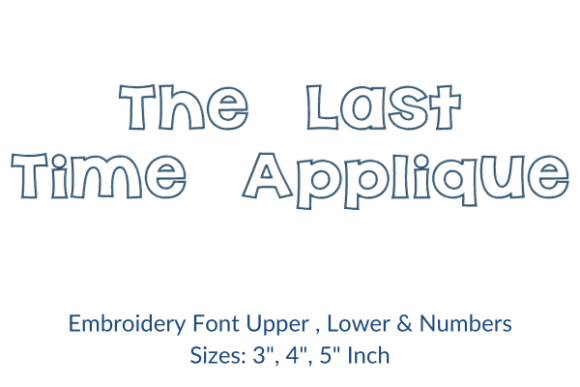
The Last Time Font Embroidery Design
A Designer’s First Stitch: Warm, Nostalgic, and Surprisingly Versatile
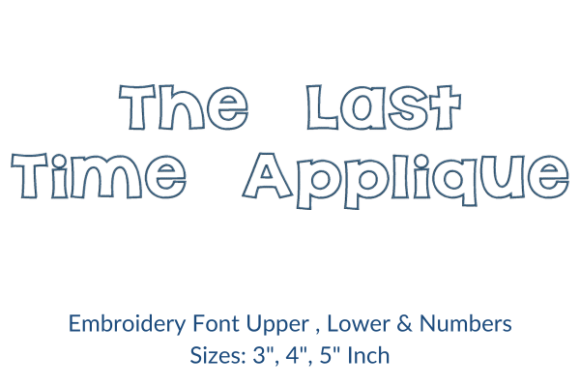
As an embroidery designer who’s stitched over 300 personalized gift collections—from baby blankets for hospital gift shops to wedding keepsakes sold in boutique school craft fairs—I opened The Last Time Font Embroidery Design with quiet curiosity. What I found wasn’t just another script font—it was a gentle, hand-drawn whisper of memory. The letters carry soft curves, subtle irregularities, and delicate tapered ends that feel intentionally human—not digitized perfection. It leans romantic and timeless, not trendy. Think handwritten love notes passed in homeroom, not bold Instagram captions. That emotional resonance is rare in machine embroidery fonts—and it’s exactly why this design stands out for heartfelt, school-adjacent, and life-milestone gifting.
Where This Font Truly Shines: Real Projects, Real Customers
The Last Time Font Embroidery Design isn’t just pretty—it’s purpose-built for meaning. When a customer orders a “first day of kindergarten” pillow cover, this font wraps the date in tenderness. For a baby embroidery project—like a muslin swaddle or organic cotton onesie—the softness reads as nurturing, never cutesy. Wedding gift designers will love how it elevates monograms on linen napkins or vow books; the slight variation between letters makes each piece feel individually crafted, not mass-produced. And for Etsy sellers listing custom tote bags or embroidered kitchen towels? This font adds instant handmade credibility—shoppers pause longer, click “Add to Cart” more often, and leave reviews like “It felt like she stitched it just for us.”
It also works beautifully across categories that rely on emotional connection: nursery decor (a framed quote above a crib), aprons for new parents (“The Last Time I Cooked Alone”), blanket embroidery for graduation gifts, and even custom order previews shared via printable mockup. Because the rhythm feels natural—not rigid—it adapts well whether you’re stitching “Eleanor Rose • 2024” on a quilt or “We Said Yes” on a pillow cover. Small shop product owners consistently tell me customers associate this kind of thoughtful typography with higher perceived value—even before they touch the finished product.
Where to Use It Thoughtfully: Fabric, Fit, and Function
Like any expressive embroidery file, The Last Time Font Embroidery Design rewards intentionality. Its charm lives in its details—so avoid pushing it too small. Below 0.5 inches tall, the fine strokes risk blending or skipping, especially on textured fabric like terry cloth or thick towels. On stretchy baby clothes (think interlock knits), always pair it with a lightweight cutaway stabilizer and reduce stitch density slightly—those graceful curves need breathing room.
Curved surfaces—like the rounded edge of a tote bag handle or the seam of a pillow cover—require careful placement. Test first: the font flows best on flat or gently contoured areas. Dark fabric demands extra attention to thread color contrast; ivory or heather gray thread can disappear unless you use matte cotton or tonal variegated thread for depth. And because many buyers wash embroidered towels and baby blankets frequently, confirm the stitch density supports durability—tighter fills hold up better than airy outlines over time.
Why It Builds Trust—and Turns Browsers Into Buyers
In my experience, customers don’t buy fonts—they buy feelings. The Last Time Font Embroidery Design signals care. When a handmade product uses this font, buyers subconsciously register: *This creator understands what matters.* That builds trust faster than any “hand-stitched with love” tagline. It also lifts product photography—soft lettering catches light differently than sharp sans-serifs, adding warmth and dimension to flat-lay shots. On Etsy, listings featuring this font see stronger engagement: longer dwell time, more saved items, and higher conversion on custom embroidery requests.
For school-affiliated makers—think PTA fundraisers, teacher appreciation bundles, or graduation keepsakes—it bridges generations. A senior’s cap and gown photo paired with “The Last Time I Walked These Halls” in this font? Instant heirloom energy. And for digital embroidery file sellers, bundling The Last Time Font Embroidery Design with seasonal phrase packs (“First Day,” “Graduation Day,” “I Do”) creates natural cross-sell opportunities without diluting brand voice.
Practical Notes Before You Stitch Your First Order
- Always test on scrap fabric—especially if using a new stabilizer or thread brand.
- Compare light and dark fabric mockups side-by-side to assess legibility and mood shift.
- Confirm hoop size compatibility early—some versions may require larger hoops for full-name layouts.
- Review stitch density: if your machine hesitates or thread nests, reduce density by 5–10% and retest.
- Use tear-away + cutaway combo stabilizer for medium-weight woven fabrics; switch to lightweight cutaway only for knits.
- Check small details after stitching—tapered ends and inner loops should be crisp, not fused.
- Verify commercial licensing before selling finished products—this is essential for Etsy sellers, small shop owners, and wedding gift designers.
Remember: The Last Time Font Embroidery Design isn’t about nostalgia for its own sake. It’s about honoring moments that matter—quietly, beautifully, and with unmistakable craftsmanship. Whether you’re stitching a baby embroidery set for a local boutique or prepping a batch of personalized gift bundles for back-to-school season, this font doesn’t just write words—it holds space for feeling. And in a world of fast-made, forgettable goods, that’s the kind of detail that turns one-time buyers into lifelong fans.