Book and Flower: A Thoughtful Embroidery Design for Meaningful Makes
As a designer who’s stitched hundreds of embroidery files for client projects, Etsy shops, and boutique merchandise, I approach every new machine embroidery design with two questions: Does it hold up in real fabric? and Does it tell a story people want to wear, gift, or display? When I opened Book and Flower, I wasn’t just scanning the preview—I was picturing it stitched onto a linen tea towel for a teacher’s welcome gift, centered on a cotton baby onesie, or framed as quiet nursery decor. That’s how this design lands: soft, intentional, and quietly confident.
A First Impression That Feels Like a Conversation
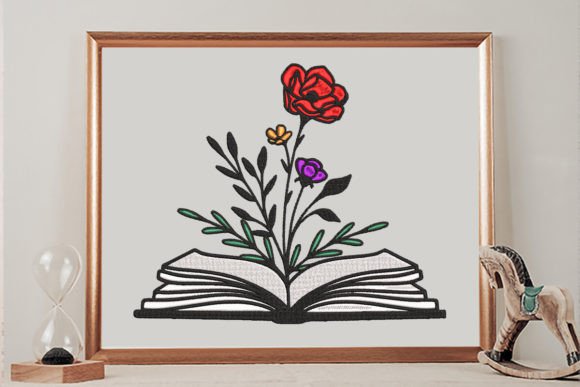
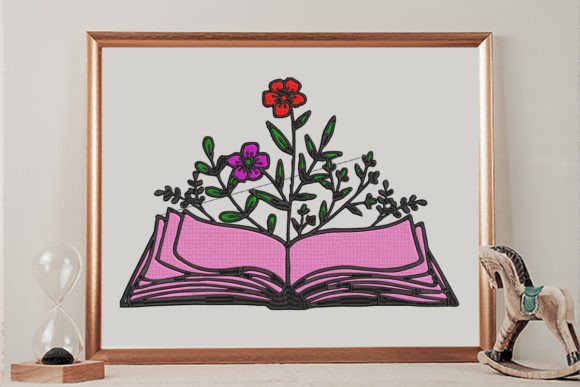
Book and Flower doesn’t shout. Its charm is in balance—the open book’s gentle curve cradling a single stylized bloom. There’s no cluttered foliage or fussy typography; instead, clean outlines, modest satin stitch petals, and subtle fill stitch pages suggest literacy, growth, and calm attention. It reads as school without leaning into cliché—no apples, no chalkboards, no cartoonish fonts. That restraint makes it work equally well for a librarian’s apron, a grad student’s tote bag, or a handmade baby blanket meant to last beyond preschool.
Where It Shines in Real Projects
I recently tested Book and Flower on a medium-weight canvas tote for a local indie bookstore’s staff gift line. Stitched at ~4.5" wide with matte cotton thread on natural canvas, it held crisp detail without stiffness. The petal edges stayed smooth, the book spine remained legible, and the overall density felt substantial—not thin, not overwhelming. That’s the sweet spot.
- Custom apparel: Works beautifully on sweatshirts and structured jackets—no distortion, even across seams. Avoid ultra-thin tees unless you reinforce with tear-away + cut-away stabilizer.
- Tote bag design & pillow covers: Ideal scale and flow. The horizontal orientation anchors the piece without competing with handles or zippers.
- Baby embroidery & nursery decor: Gentle enough for onesies and swaddles; pair with pale thread (heather gray, oat, blush) for warmth without fuss.
- Embroidered patch: Clean outer edge means it’ll fuse or sew cleanly onto denim jackets or backpacks.
- Holiday embroidery & personalized gifts: Add a small “For My Favorite Reader” running stitch banner beneath—but only if your file allows easy editing. Don’t force extra text into tight spaces.
Where to Pause—and Plan Ahead
This isn’t a “drop-and-stitch” file for every surface. A few real-world cautions:
- Small hoop sizes: If your hoop is under 4x4", check whether the full design fits—or if cropping the book or flower compromises its harmony. Some versions may offer simplified variants; verify before cutting.
- Textured or stretchy fabric: On terry cloth towels or ribbed knit caps, the fine petal outlines can blur. Use a light- to medium-weight cut-away stabilizer and slow your machine speed by 10–15%.
- Dark fabric: The design relies on shape more than contrast—so test thread colors carefully. A charcoal gray satin stitch on black twill reads elegantly; white thread on navy can fade visually unless you add an underlay stitch (if your software allows).
- Curved surfaces (like caps): The book’s flat geometry doesn’t wrap naturally. Best used on front panels—not curved crowns—unless resized and digitized specifically for that application.
What It Adds to Your Handmade Product—Beyond Stitching
Using Book and Flower does more than fill space—it adds quiet credibility. Customers notice when a design feels considered, not copied. A teacher receiving a tote with this embroidered on the front doesn’t see “generic school clipart.” She sees intention. That builds trust, especially for Etsy sellers and small shop owners pricing handmade goods at a premium.
It also supports brand consistency. If your craft business centers on mindful learning, gentle parenting, or literary gifts, Book and Flower becomes a visual anchor—reusable across product types (tea towels, patches, greeting cards) without feeling repetitive. And because it avoids seasonal tropes, it stays relevant year-round—no need to rotate inventory for back-to-school vs. graduation vs. teacher appreciation.
Practical Designer Notes Before You Stitch
Before committing to a batch of finished products:
- Test the machine embroidery design on scrap fabric matching your final item—especially for nap, stretch, and weight.
- Review stitch density in your embroidery software. If fill areas look overly dense, consider reducing density by 5–8% for breathability on baby items or lightweight apparel.
- Confirm hoop size requirements. If selling digital embroidery files, note the largest dimension clearly in your listing—crafters appreciate that transparency.
- Inspect small details at actual size: Are petal tips sharp? Does the book’s center seam read as a fold, not a gap? Zoom in—don’t rely on thumbnails.
- Try a black-and-white printable mockup first. Does the silhouette hold up? That tells you whether it’ll translate well to packaging, social posts, or shop banners.
- Check licensing terms—especially if you plan to sell physical finished products or resell the digital embroidery file. Not all school-themed designs permit commercial use out of the box.
- Use appropriate stabilizer: Cut-away for knits, tear-away for stable wovens, and fusible + tear-away for delicate linens.
A Design That Grows With Your Craft Business
Book and Flower isn’t flashy—but that’s why it endures. In a market saturated with loud, trend-driven embroidery files, it offers something rarer: quiet resonance. It works for a teen embroidering her first sweatshirt, a small shop owner building a cohesive holiday collection, or a digital product seller curating a thoughtful embroidery bundle for educators.
It reminds me that the strongest design assets aren’t always the most complex—they’re the ones that feel honest, fit naturally into daily life, and leave room for the maker’s voice to come through. Whether you’re stitching it for a newborn’s library kit or printing a mockup for your next Etsy listing, Book and Flower earns its place—not as decoration, but as meaning made tangible, one stitch at a time.