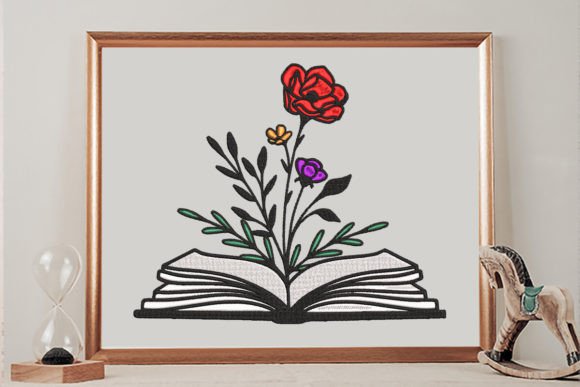
Flower Books Embroidery Design
First Impression: Whimsy That Stands Out on a Crowded Craft Fair Table
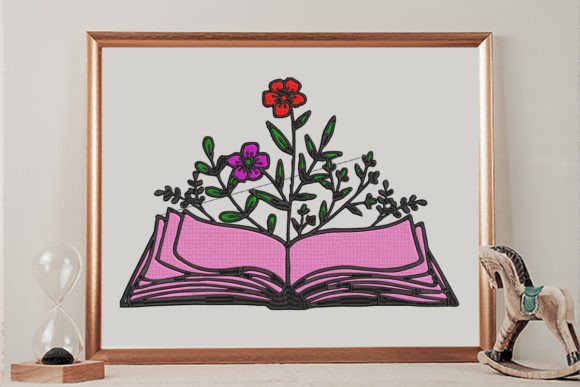
As an embroidery designer who’s prepped over 200 craft fair booths—and watched real customers pause, point, and reach for certain items—my first reaction to Flower Books was immediate: this is a handmade product magnet. The name alone evokes storybook charm, gentle botanicals, and quiet creativity—not loud or trendy, but deeply resonant with buyers who value intention, nostalgia, and tactile beauty. It reads as soft, decorative, and premium—not rustic or farmhouse, not modern-minimal, but warmly literary and quietly elegant. That’s gold at a handmade market, where shoppers scan quickly and connect emotionally before they think logically.
Where Flower Books Shines (and Where It Needs Care)
On tote bag design, Flower Books works beautifully centered near the bottom hem or scaled slightly larger on the front panel—its organic shape balances the structure of canvas or linen without overwhelming it. As apron embroidery, it lands perfectly above the pocket: legible, charming, and just distinctive enough to spark conversation (“Is that a book? A garden? Both?”). For tea towel embroidery, it’s ideal—small enough to avoid crowding the weave, yet detailed enough to reward close looking. I’d place it in the lower corner or along the hem, letting the fabric’s texture play with the stitches.
Flower Books also elevates small-format handmade products: embroidered patches (great for layering on denim jackets or tote straps), fabric pouches (especially cotton-linen blends), and pillow covers (where its gentle scale feels intentional, not timid). As a craft fair product, it performs strongest when stitched on natural fibers—linen, medium-weight cotton, or brushed twill—where thread sheen and stitch definition shine without fighting the surface.
What Holds Back Its Impact (And How to Fix It)
This isn’t a “stitch-and-go” design for every substrate. On thick fabric like heavy canvas market bags or textured terry cloth towels, fine stem stitches or delicate petal outlines may blur—stitch density matters here. Tiny details could vanish on curved surfaces like caps unless digitized with careful underlay and reduced fill angles. And on dark fabric? Test your thread colors rigorously: light pastels may fade visually unless backed with high-contrast stabilizer or paired with tonal metallics.
Most critically: Flower Books loses clarity below ~3.5 inches wide. Don’t force it onto tiny keychain pouches or narrow strap accents—it’s not built for micro-scale. It’s a mid-size machine embroidery design, meant to be seen, savored, and remembered—not scanned and forgotten.
Real Booth & Business Value
In my booth, Flower Books consistently draws slower, more engaged browsing. Why? It’s visual appeal with narrative weight—shoppers don’t just see “flowers,” they imagine stories, gifts, heirlooms. That translates directly to higher perceived product value. When stitched cleanly on a linen tea towel beside a handwritten care tag, it reads as curated, not mass-produced. Paired with a matching embroidered patch on a denim apron? That’s brand consistency in action—subtle, repeatable, memorable.
For Etsy sellers and small shop owners, Flower Books is a versatile digital embroidery file that supports multiple SKUs without needing new artwork: same design, different placements, fabrics, and pairings. That’s efficient commercial embroidery—and essential when you’re batching 40+ items before a weekend market.
Photography & Online Listings: Does It Translate?
Absolutely—if shot thoughtfully. Flower Books photographs well because it has gentle contrast, clear negative space, and organic flow. Use natural light, a clean neutral background, and show it in context: folded on a shelf, draped over a wooden stool, pinned to a corkboard beside vintage books. Avoid flat-lay clutter—let the design breathe. For printable mockups, choose templates with soft shadows and fabric drape; skip stiff, clinical renders. This design sells on feeling, not specs.
Production Notes Every Embroidery Designer Should Run Through
- Test the design on scrap fabric—especially your intended base (e.g., unbleached linen vs. dyed cotton).
- Check thread contrast across your palette: does mint green read clearly on oatmeal? Does cream pop on navy?
- Review spacing between elements—tight loops or overlapping stems can cause nesting or skipped stitches.
- Confirm hoop size compatibility with your frame setup before cutting dozens of pieces.
- Inspect stitch density in floral centers—overly dense fills may pucker thin fabrics.
- Use the right stabilizer: cutaway for knits, tear-away for stable wovens, and fusible + tear-away for lightweight linens.
- Create at least one real mockup—not digital, not printed—before committing to batch production.
- Compare fabric colors side-by-side under daylight and indoor lighting—you’ll spot dullness or glare early.
- Confirm commercial licensing before selling finished products. Since this is listed under School and Embroidery, verify usage rights apply to your business model.
Final Thought: A Quiet Workhorse for Creative Entrepreneurs
Flower Books won’t shout from your booth—but it will make people stop, smile, and ask, “Where did you get that?” It’s the kind of embroidery file that builds trust: thoughtful, refined, and rooted in craft rather than trend. For handmade shop owners, Cricut and embroidery crafters, and digital sellers, it’s reliable design assets that support storytelling, scalability, and authenticity. Not every craft fair product needs fireworks. Sometimes, all it takes is a single, well-stitched bloom inside an open book—soft, smart, and unmistakably yours.